

Insights
Feb 22, 2026
Fidelity Investments Photo by: FI
The narrative around Bitcoin and digital assets in early 2026 centres on progression beyond headline price movements. According to Fidelity Digital Assets’ 2026 Look Ahead, the quiet structural work underway in the digital-asset ecosystem may matter more than flat price action in 2025. Fidelity frames this period as a “shipping container moment” for the industry, where foundational layers of infrastructure, regulation, and institutional adoption are being built before a future phase of value recognition.
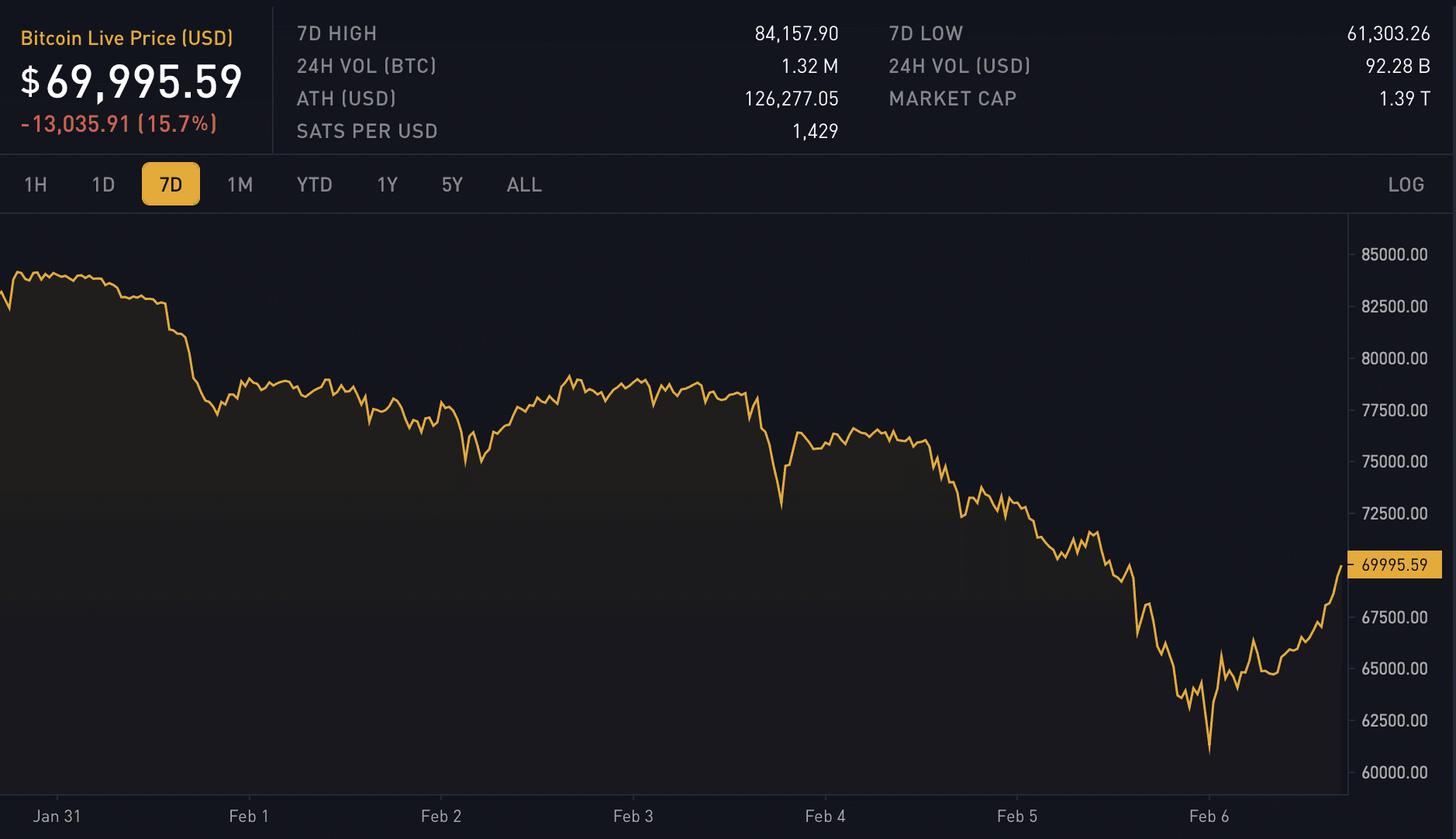
Bitcoin ended 2025 with little net price change, prompting some commentators to interpret the status quo as stagnation. Fidelity’s analysis suggests a different view: markets often progress through infrastructure build-outs long before prices reflect that progress. In the same way that global logistical innovation during the 20th century was invisible until it transformed commerce, Fidelity argues that digital assets are in a foundational phase where structural evolution precedes repricing.
The report points to several developments underpinning this thesis. Regulatory frameworks globally have clarified year-over-year, enabling deeper institutional participation and broader access channels. Spot Bitcoin exchange-traded products and related custody offerings have matured, providing entry points for traditional investors. Fidelity highlights that this deepening of market infrastructure and growing adoption can drive future cycles even if prices remain flat in the short term.
A key element of the evolving ecosystem is the diversification of market mechanisms around Bitcoin. Futures, options, and other derivatives now account for a substantial share of activity, particularly during episodes of volatility, reflecting sophisticated hedging and risk-management behaviour by institutional traders. Fidelity’s report argues that this derivatives dominance is a marker of maturity rather than fragility, with institutional players engaging ahead of price discovery.
Another notable trend is the rising prominence of corporate Bitcoin holdings. Public companies allocating significant portions of their balance sheets to Bitcoin are increasing in number, and this corporate treasury movement suggests a broader rethinking of Bitcoin’s role within institutional asset allocation. While exact figures from the Fidelity report are proprietary, the broader trend of rising Bitcoin treasury activity is recognised across market observers as signalling deeper engagement by business entities beyond purely speculative demand.
The report also highlights structural shifts in mining economics. Fidelity identifies a developing trade-off between Bitcoin mining and alternative compute usage, particularly AI hosting. These dynamics could lead to flatter hash-rate growth, which, counterintuitively, may improve mining economics and decentralisation by reducing overinvestment in specialised hardware. Such changes in the network’s resource allocation are presented as resilience signals rather than weaknesses.
Liquidity is another central theme. With trillions parked in money market funds and other low-yield instruments globally, Fidelity underscores that a rotation of even a tiny fraction of this capital into risk assets like Bitcoin could dwarf existing flows. This macro perspective places Bitcoin in a broader financial context where liquidity conditions and monetary policy shifts are powerful drivers of asset behaviour.
Fidelity also embeds Bitcoin within the macro “store of value” narrative alongside gold, noting that precious metals and Bitcoin can complement each other across different phases of risk and liquidity regimes. As global monetary conditions evolve, Bitcoin’s fixed supply and decentralised properties set it apart as an asset responsive to liquidity and macro pressures.
The Look Ahead report further acknowledges long-term technological considerations including quantum computing risk and community responses underway to boost cryptographic resilience. These pre-emptive discussions on security and protocol robustness reflect a network preparing technically for future challenges rather than reacting to them.
In sum, Fidelity’s outlook frames digital assets not as a speculative bubble or a fading market but as one undergoing essential structural upgrades. Price alone, the firm argues, is not the correct barometer of progress during this phase. Instead, deepening infrastructure, institutional adoption, diversified market mechanisms, and macro liquidity dynamics collectively lay the groundwork for the next major stage of Bitcoin’s integration into global finance.
Closing Insight:
Bitcoin’s story in early 2026 is not one of excitement at the ticker. It is one of quiet, methodical growth beneath the surface, where infrastructure catches up to ambition. As with past financial transformations, it is the latent, invisible work that often precedes the next wave of recognition. Fidelity’s perspective underscores that price disconnected from these undercurrents is a poor basis for judging the trajectory of Bitcoin and digital assets.