Insights
Feb 22, 2026
Google Buys Stake in Bitcoin Miner Cipher Photo by: Midjourney
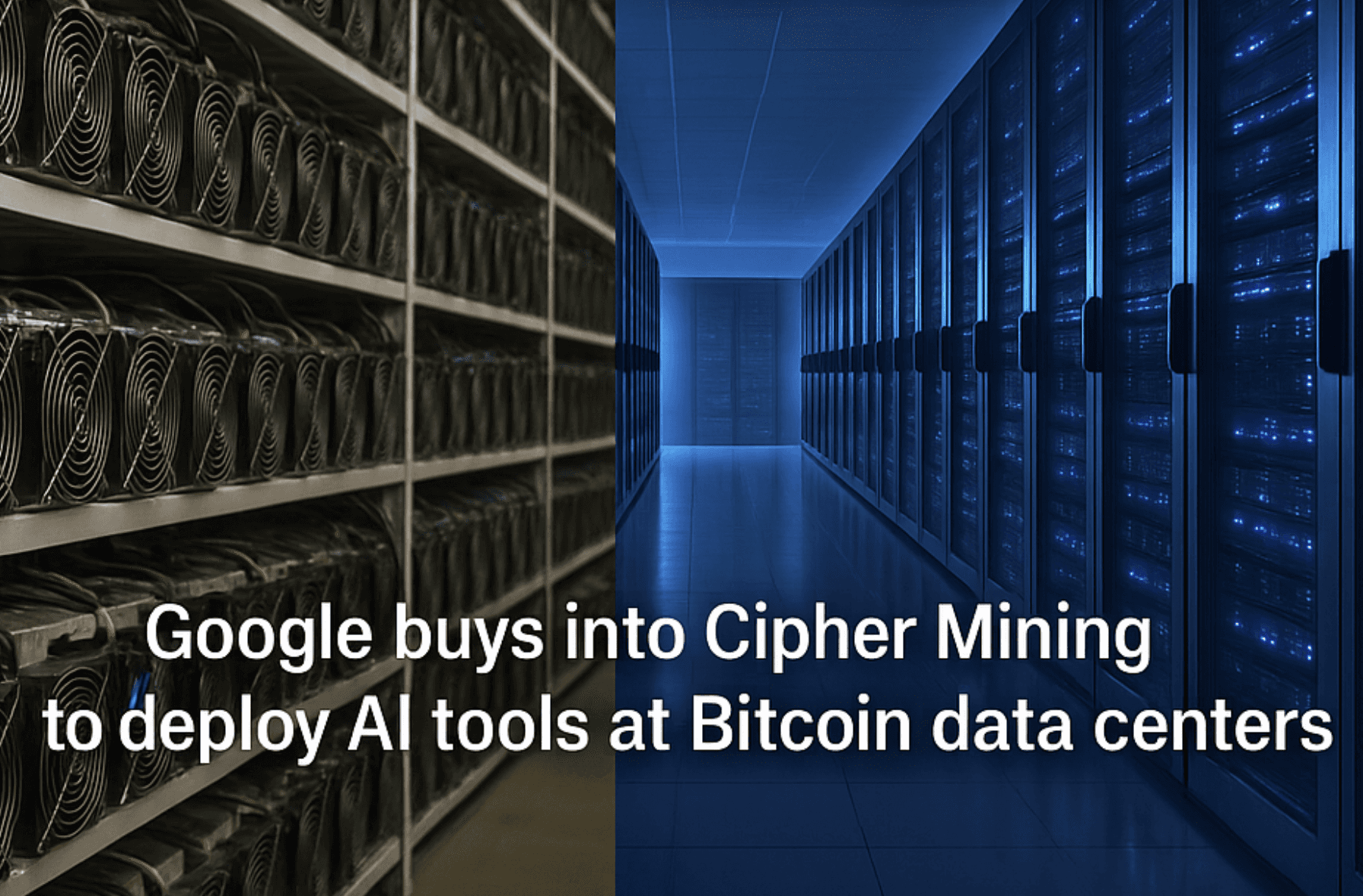
On September 21, 2025, Cointelegraph reported that Google’s parent company, Alphabet, acquired a $5.4 million stakein Cipher Mining, a Texas-based Bitcoin miner. The deal wasn’t about buying into Bitcoin speculation. It was tied to a partnership: Cipher will use Google Cloud’s AI tools to optimize its operations — from forecasting power prices to managing energy use more efficiently.
The dollar figure is modest by Google’s standards, but the symbolism is larger. This marks one of the first known cases of a Silicon Valley giant investing directly in a U.S. Bitcoin miner — not for ideology, but for infrastructure. Cipher’s data centers, which already run 24/7 to mine Bitcoin, aren’t that different from the ones used to train AI models. Both require massive electricity, cooling, and uptime. From Google’s perspective, this is high-performance computing — and Cipher knows how to run it efficiently.
There’s a deeper story here, though, about energy, sovereignty, and convergence.
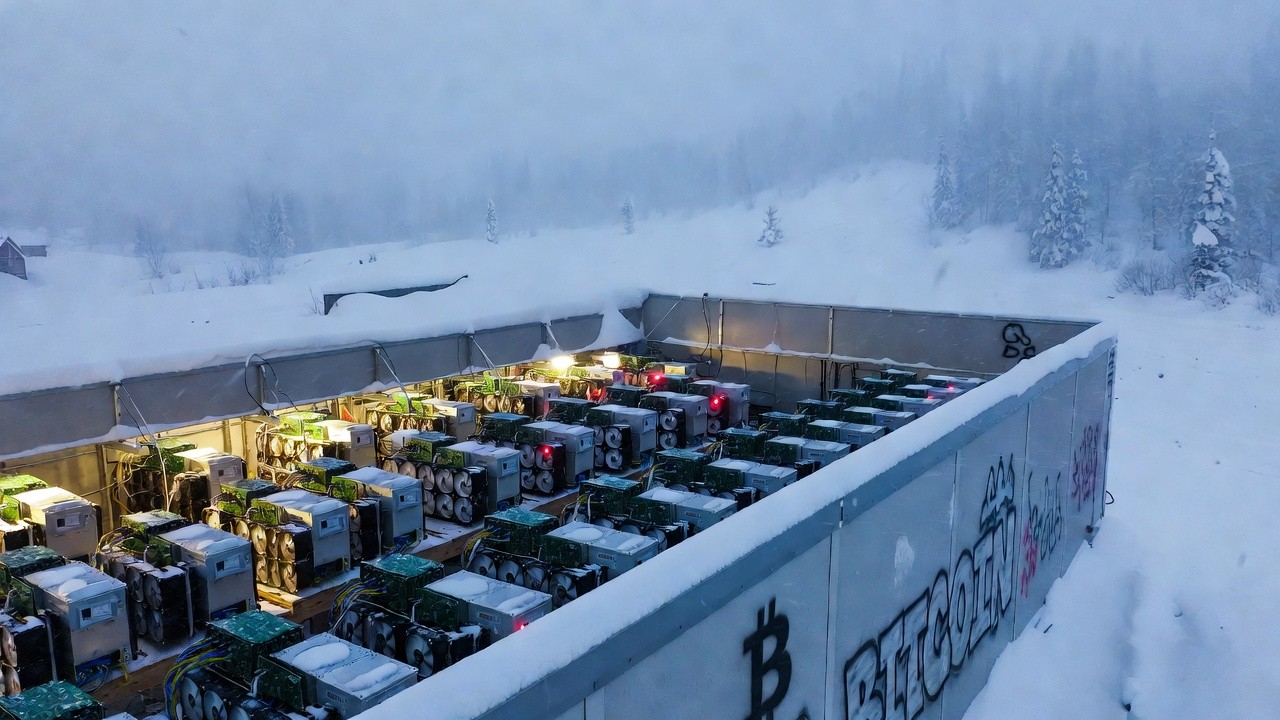
Bitcoin mining has long been dismissed as wasteful — just machines burning electricity for digital coins. But that misses the role miners play in stabilizing energy grids. In places with volatile power markets, miners are becoming flexible load partners, shutting down when needed to help balance demand — something most traditional data centers aren’t built to do.
Meanwhile, with AI’s rising power needs, energy is becoming the new oil. Data centers are now strategic infrastructure. That makes Cipher’s hardened facilities more than Bitcoin machines — they’re prototypes for tomorrow’s compute infrastructure, optimized for both performance and flexibility.
So what does this mean for those of us watching Bitcoin as a tool for financial freedom, not just tech speculation?
First, it signals convergence. The divide between Bitcoin and Big Tech is narrowing — not because Google shares Bitcoin’s values, but because their infrastructure needs are overlapping. That could make mining more robust, but also more centralized and corporate.
Second, it underscores how energy is power — politically and economically. Bitcoin mining offers one of the few ways individuals or small firms can tap into the global computing economy without needing permission.
And finally, this moment shows how much the narrative has shifted. Over a decade ago, Google’s Eric Schmidt called Bitcoin a “remarkable cryptographic achievement.” Now, the company is quietly stepping into the mining world — not to evangelize, but to integrate. That tells us Bitcoin is no longer fringe. It’s infrastructure. It’s being woven into the machinery of the future — and shaping it from the inside.