
Insights
Feb 22, 2026
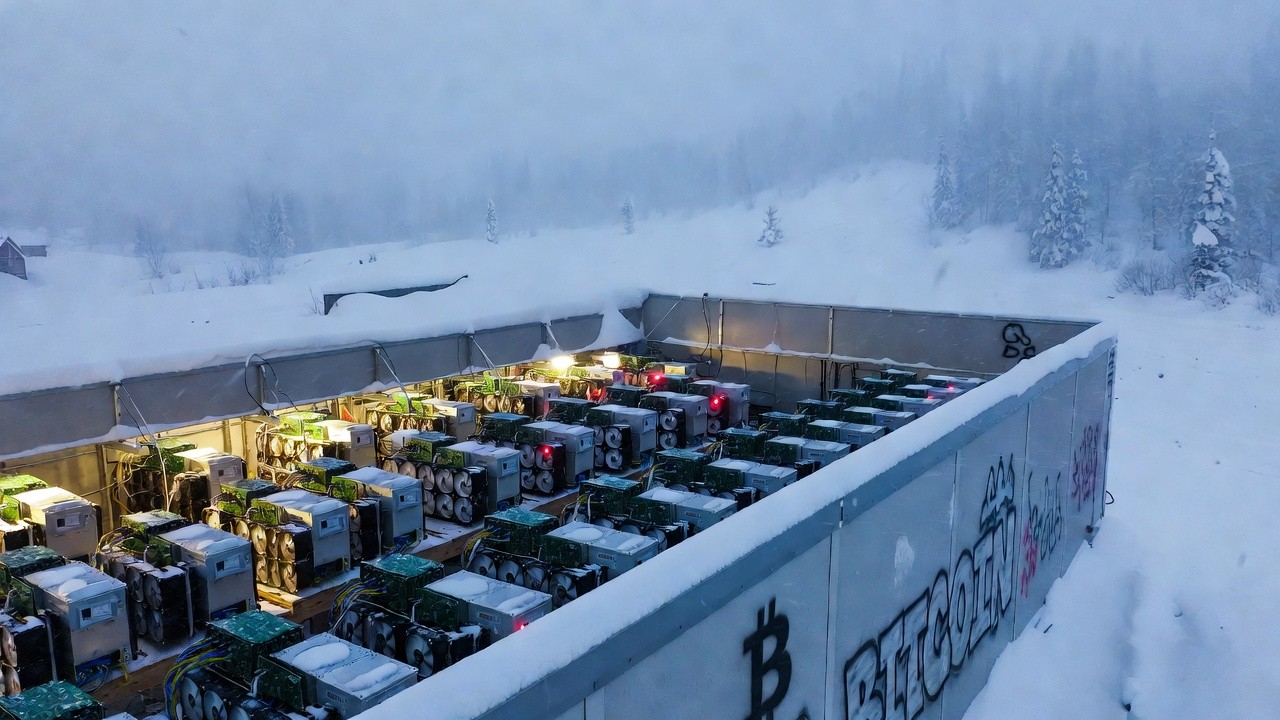
Bitcoin mining reduced output during storm Photo by: Grok
Bitcoin’s latest difficulty adjustment delivered one of the sharpest downward moves since 2021, cutting mining difficulty by roughly 11.16% to around 125.86 trillion. The move followed a period in which blocks were being found more slowly than the 10 minute target, triggering the protocol’s automatic reset mechanism. Difficulty adjustments are mechanical. When hashrate falls and blocks slow, the network lowers difficulty to bring block times back towards schedule.
The recent drop does not, on its own, prove that miners are permanently shutting down or that the network is under structural stress. Reporting around late January 2026 points instead to a concentrated disruption in the United States. Severe winter storms and grid stress led several large North American operators to curtail operations temporarily.
Notably, Foundry USA, the largest mining pool by hashrate share, saw a sharp decline in pool hashrate during the peak of the disruption. That pattern is consistent with weather driven curtailment rather than a broad global exodus of miners. In recent years, parts of the US mining sector have evolved into flexible industrial loads. Some operators participate in demand response programmes or power markets that incentivise switching off during periods of grid stress.
When extreme weather hits, hashrate can drop quickly, then return just as quickly once conditions stabilise. In that context, the difficulty reduction looks more like a short term shock than a structural break. The immediate effect of the adjustment is straightforward. Block times should normalise, improving confirmation times.
For miners that remained online, lower difficulty temporarily increases expected bitcoin earned per unit of hashrate, offering short term relief to the most efficient operators. Whether this turns into a broader profitability cycle depends on how quickly hashrate returns and how margins evolve. Alongside the difficulty story is another development users notice more directly, very low transaction fees. It is important to separate the two.
Difficulty is a supply side variable tied to hashrate. Fees are driven primarily by demand for blockspace. Recent data shows frequent non full blocks and extended periods of low competition for inclusion. When the mempool is light, users do not need to bid aggressively. Fee rates can fall towards policy minimums, sometimes around 1 sat per vbyte or even lower in quiet conditions.
That benefits users seeking to consolidate UTXOs or move funds cheaply, but it also highlights how much miner revenue still depends on the block subsidy rather than transaction fees. Industry research over the past year has pointed to a rise in low fee or near empty blocks during quieter periods. After earlier bursts of activity linked to Ordinals and other inscription related use cases, on chain demand has cooled. As those spikes faded, fee pressure eased significantly.
Taken together, the combination of difficulty down and fees down reflects two separate dynamics. On the supply side, a likely weather driven hashrate dip triggered a large negative retarget. On the demand side, subdued competition for blockspace is keeping fees compressed.
The key question now is persistence. If hashrate rebounds as storm conditions pass and difficulty begins to adjust upward again, the episode will look like a temporary interruption. If fees remain structurally low over multiple cycles, the longer term discussion about Bitcoin’s security budget and miner revenue mix will continue to intensify, particularly as future halvings reduce the subsidy further.
For now, the episode serves as a reminder of how Bitcoin’s design responds to real world shocks.
The protocol does not interpret weather, grids or markets. It simply adjusts. Blocks keep coming, difficulty recalibrates, and the fee market reflects actual demand for settlement. In that sense, the system is behaving exactly as intended.