Insights
Feb 22, 2026
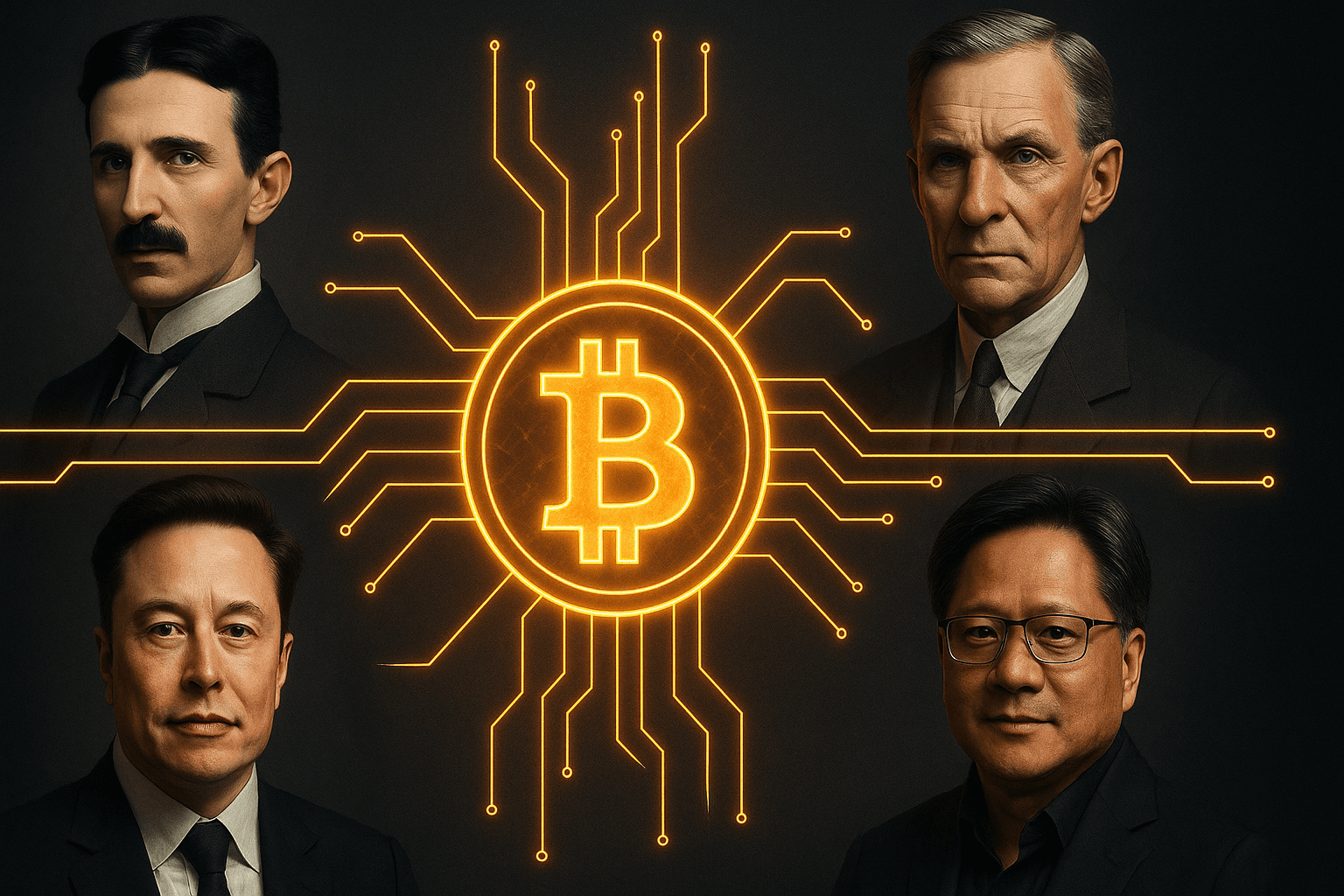
Nicola Tesla, Henry Ford, Elon Musk & Jesen Huang Photo by: AI
The idea that money should reflect real and measurable value has surfaced repeatedly throughout modern history. Although framed differently across eras, the underlying insight has remained constant, that civilisation advances when societies learn to harness energy more effectively. Today, with comments from Elon Musk and rising interest in Bitcoin as a monetary system grounded in energy expenditure, this principle is gaining renewed clarity.
Nikola Tesla understood more than most that energy is the foundation of progress. His work on alternating current generation and long distance transmission transformed the economic possibilities of the twentieth century. Tesla believed that universal access to electricity would raise living standards, increase productive capacity and reshape social structures. While he did not articulate a monetary theory, his writings and lectures consistently suggested that economic value is a byproduct of energy captured and directed through technology. Tesla saw energy not as an abstract concept but as the raw material of civilisation. In this sense, he pointed toward a world where value stems from the ability to convert natural forces into productive power.
Henry Ford expanded this insight into the realm of industrial organisation. His assembly line revolutionised manufacturing by coordinating human labour with mechanical energy at unprecedented efficiency. Ford recognised that machines powered by electricity and fuel could multiply output far beyond the limits of manual work. He spoke often about productivity, efficiency and the economic importance of accessible energy. For Ford, economic value was created when energy and labour were arranged in a system that produced reliable, low cost goods. Although he did not define money as energy, the logic of his industrial model implied that energy throughput determines productive capacity and therefore shapes economic value.
More than a century later, the same principle applies, but at far larger scale. Modern economies rely on computational power, industrial automation and globally connected infrastructure, all of which depend on electricity. Artificial intelligence, data centres, autonomous systems and advanced manufacturing consume enormous and increasing amounts of energy. In this environment, it is increasingly difficult to separate economic value from the energy required to produce and maintain it.
Elon Musk placed this at the centre of public discussion this week. Speaking about the long term impact of artificial intelligence and robotics, Musk argued that traditional money will lose relevance as automation satisfies more human needs. He described money as a database for labour allocation and suggested that when labour is optional that mechanism fails. In his view, energy is the true currency because it cannot be created by decree and cannot be faked. Musk added that Bitcoin already operates on this basis since its issuance and security require measurable energy expenditure.
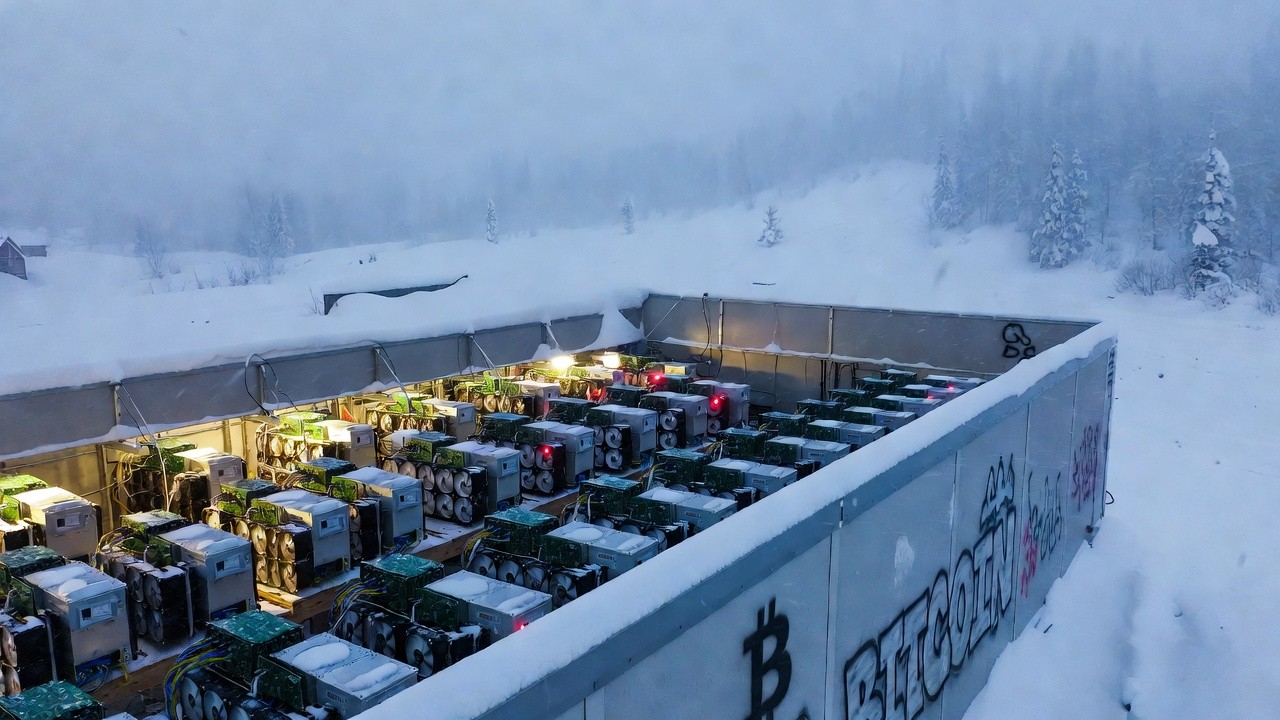
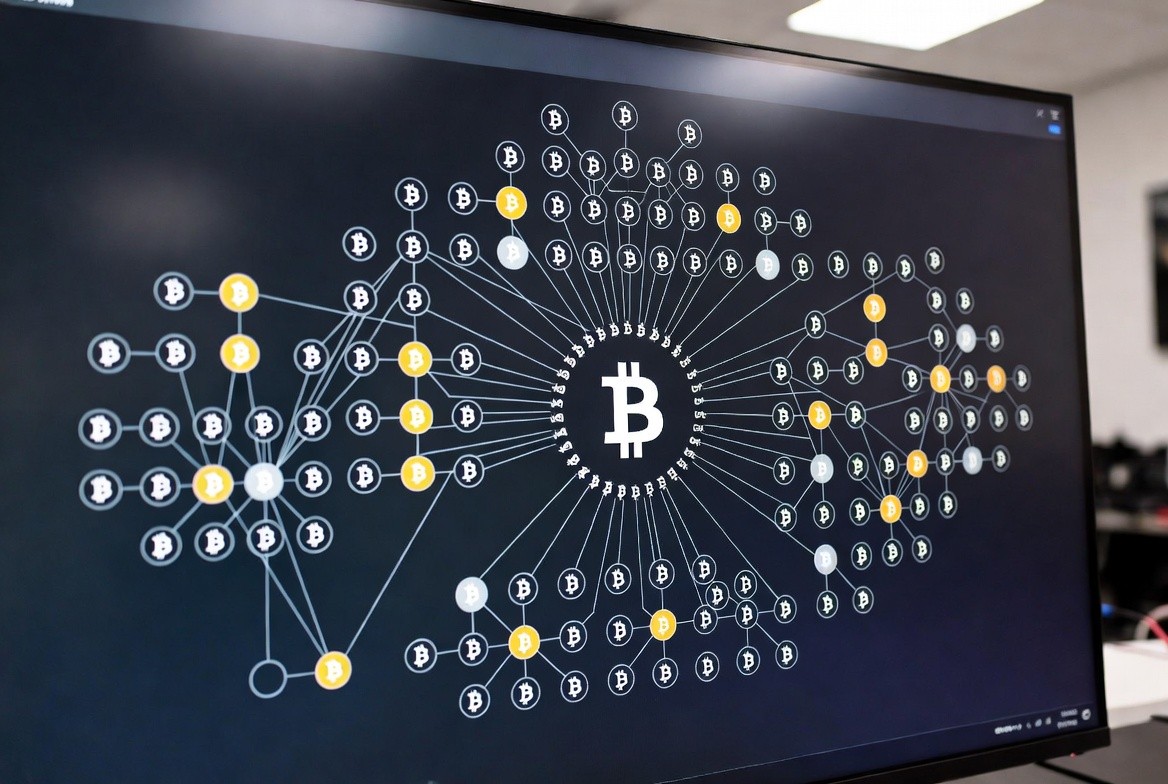
Bitcoin formalises this link through proof of work. Miners expend electricity to perform computations that secure the network and verify transactions. This process introduces a physical cost into the monetary system, a cost that is objective and globally verifiable. Every bitcoin brought into circulation represents energy consumed. This creates scarcity that is independent of political decision making and grounded in natural limits. Unlike fiat currencies, which expand through credit creation and policy intervention, Bitcoin’s supply schedule is fixed and its creation depends on energy availability and mining efficiency.
Jensen Huang, the chief executive of Nvidia, recently reinforced the connection between energy and economic possibility. He observed that artificial intelligence systems require vast amounts of power and that the growth of computing infrastructure will be constrained first by energy supply. For Huang, energy is not only an input to technology, it is the limiting factor that defines the trajectory of technological progress. This view supports the argument that a monetary system acknowledging energy constraints mirrors the reality of a digital and computation heavy world.
Bitcoin mining illustrates this connection with unusual clarity. Miners compete globally for the cheapest available electricity, often turning to stranded or surplus energy that has little commercial use. This behaviour can strengthen energy markets by monetising otherwise wasted power and by encouraging investment in renewable and underutilised resources. A monetary system that recognises energy as a foundational constraint can, in this way, contribute to more efficient resource allocation.
There are unavoidable challenges. Energy use has environmental and geopolitical consequences and must be balanced with sustainability, regional differences in supply and long term infrastructure planning. Even so, the broader trend is clear. Modern economies are built on vast energy requirements and that dependence will intensify as computing becomes embedded in every industrial, financial and social system.
Seen across time, the journey from Tesla’s electrical revolution to Ford’s industrial process to Huang’s AI infrastructure and Musk’s argument that energy is the true currency reveals a consistent theme. Societies create value by mastering energy. Money that reflects this connection is more aligned with physical reality than systems that rely purely on discretionary policy or expanding credit.
Bitcoin embodies that idea. It converts electricity into a durable, scarce digital asset and anchors monetary issuance to measurable cost. It is a form of money that recognises the physical basis of economic value. Whether it becomes a dominant standard or remains one influential example, Bitcoin has already reintroduced a principle that shaped the industrial age and now shapes the digital one. Economic value begins with energy and money grounded in energy may prove more resilient than systems detached from physical constraints.