

Insights
Feb 22, 2026
Top 25 of 2025 Photo by: Midjourney
2025 was the year Bitcoin stopped being treated like a financial curiosity and started being handled, by governments, regulators, banks, and the biggest asset managers, as a permanent fixture in modern markets. That shift did not happen in one announcement. It arrived through a sequence of policy decisions, market structure upgrades, balance sheet moves, and a reminder, in October, that Bitcoin is still a volatile asset even as it institutionalises.
Below are the 25 moments that best capture how Bitcoin’s role evolved across the year, in chronological order, with the emphasis on what changed and why it mattered.
1. January: Czech central bank Overton window moment.
Czech National Bank Governor Aleš Michl said he would propose holding Bitcoin in reserves, framing it as diversification rather than ideology. Even without approval, a G10-adjacent central bank discussing Bitcoin in reserve management terms was a signal shift.
2. January: Lagarde pushes back, the process continues.
Following day ECB President Christine Lagarde publicly dismissed the idea of EU central banks holding Bitcoin, but CNB’s board proceeded with analysis. The story highlighted the new dynamic: Bitcoin debated inside institutions, not just outside them.
3. February: MicroStrategy becomes “Strategy”.
The rebrand, with Bitcoin pushed to the centre of its identity, made explicit what markets had already priced in. Corporate Bitcoin treasuries were no longer an oddity, they were being packaged as a category.
4. March: Executive order creates a U.S. Strategic Bitcoin Reserve.
The United States formalised Bitcoin as a strategic asset, capitalised primarily with forfeited holdings, and set a policy direction that treated BTC distinctly from other digital assets. Symbolically, it put Bitcoin in the language of reserves.
5. March: First White House crypto summit.
The summit brought industry leaders into direct dialogue with the administration, with the reserve and policy direction as headline themes. It was a clear statement that Washington intended to shape outcomes, not merely react to markets.
6. March: OCC Interpretive Letter 1183 resets banking posture.
The OCC reaffirmed that national banks can provide crypto custody, support certain stablecoin activities, and participate in distributed networks, and it removed the earlier supervisory non objection hurdle. For bank risk committees, it was a practical green light.
7. May: OCC Interpretive Letter 1184 expands custody and execution clarity.
The OCC clarified that banks may outsource custody and execution to third parties under appropriate risk management, and may buy and sell assets held in custody at a customer’s direction. It pushed crypto rails closer to standard bank operations.
8. May: U.S. Labor Department rescinds its 2022 401(k) warning.
By withdrawing its earlier “extreme care” guidance, the DOL returned to a more neutral stance on plan fiduciaries considering crypto exposure. It mattered less for immediate adoption than for the direction of regulatory tone.
9. July: The CLARITY Act passes the U.S. House.
The House approved a market structure framework designed to draw clearer lines between commodities and securities treatment. Even before the Senate’s next steps, the vote signalled bipartisan momentum towards rules based regulation.
10. July: The GENIUS Act becomes law.
A federal stablecoin framework landed, which mattered for Bitcoin because dollar stablecoins are key plumbing for liquidity, settlement, and exchange infrastructure. A more regulated stablecoin market can reduce fragility at the edges of BTC liquidity.
11. July: SEC permits in kind creations and redemptions for crypto ETPs.
Allowing in kind mechanics brought spot Bitcoin products closer to how commodity ETFs typically function. It was an unglamorous change with real impact: lower friction, improved efficiency, and stronger alignment with institutional workflows.
12. September: U.S. Bank resumes Bitcoin custody with NYDIG.
A major U.S. bank restarted institutional Bitcoin custody and expanded services to include Bitcoin ETF support. The message was straightforward: the regulatory environment had shifted enough for mainstream fund servicing to engage again.
13. September: Bitcoin reaches the 1 zettahash milestone.
Crossing 1 ZH on widely cited measures marked a scale milestone for Proof of Work security and industrial investment. It also underlined the ongoing arms race: more hashpower, higher difficulty, tighter margins.
14. September: IBIT options overtake Deribit.
BlackRock’s IBIT becoming the largest venue for Bitcoin options open interest illustrated a centre of gravity move from offshore to regulated markets. Bitcoin derivatives, and the risks they carry, were increasingly being warehoused on Wall Street rails.
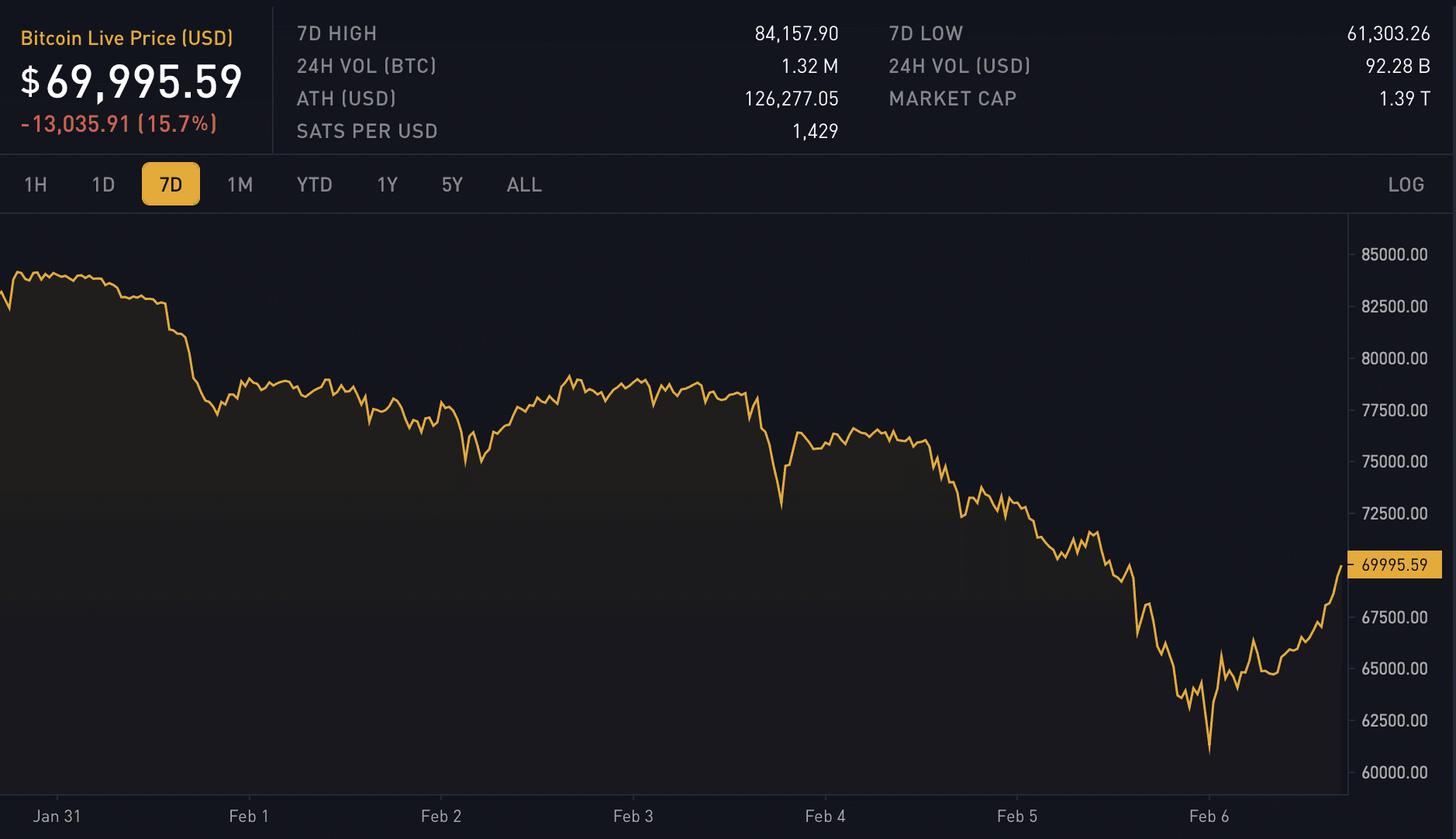
15. October: Bitcoin prints a fresh all time high above $125,000.
The new peak was not just a price headline. It reflected months of institutional integration, ETF adoption, and a policy backdrop perceived as more supportive in the United States.
16. October: Reuters confirms the rally’s institutional framing.
Coverage around the record emphasised institutional participation and policy tailwinds as key drivers. That framing, widely repeated through the year, reinforced Bitcoin’s shift from retail led narrative cycles to macro and flows.
17. October: The “10/10” shock and historic liquidations.
A sudden tariff escalation and risk off surge triggered the largest liquidation event in crypto history, with more than $19 billion wiped out across leveraged positions. The episode reminded markets that leverage still amplifies Bitcoin’s moves, even in an ETF era.
18. November: Harvard discloses a $443m IBIT position.
A flagship endowment holding Bitcoin exposure at meaningful size helped normalise BTC as an acceptable portfolio component for conservative institutions. It was a psychological milestone for the “career risk” calculus.
19. November: Hashprice falls to a five year low near $38 per PH/s.
Miner economics tightened sharply, driven by difficulty and hashrate near highs against a weaker post peak price. The squeeze pushed the mining sector deeper into efficiency drives, consolidation, and adjacent revenue strategies.
20. November: IBIT posts a record $523m single day outflow.
ETF flows became a visible market driver in both directions, not just an adoption story. The outflow confirmed that Bitcoin’s new investor base can be quick to de risk when macro sentiment turns. The Financial Times reported IBIT was nearing $100bn AUM, and holding roughly 798,747 BTC, putting it ahead of any single corporate treasury holder in raw bitcoin terms.(IBIT is an ETF, not a company, so Strategy can still be described as the largest corporate holder)
21. November: Abu Dhabi’s ADIC triples its IBIT stake.
A subsidiary of ADIC, linked to Mubadala, disclosed a much larger IBIT position, highlighting sovereign wealth interest via regulated products. Bitcoin exposure through ETFs looked increasingly like the preferred on ramp for large pools of capital.
22. December: Poland’s MiCA bill veto stands.
Poland’s parliament failed to override a presidential veto on crypto legislation aimed at implementing MiCA related rules. The episode showed that, even within the EU, the path to consistent regulatory implementation can be politically messy.
23. December: Strategy buys 10,624 BTC, nearly $1bn.
Strategy’s purchase of 10,624 BTC for about $963 million lifted its total holdings to 660,624 BTC as of 7 December, reinforcing its position as the world’s largest corporate holder of Bitcoin. The scale matters because it keeps the corporate treasury bid visible even after October’s deleveraging reset, and it highlights how capital markets vehicles can act as persistent demand.
24. December: PNC embeds spot Bitcoin access via Coinbase.
A major U.S. bank launched direct spot Bitcoin trading for eligible private bank clients inside its own platform, powered by Coinbase infrastructure. This was a practical integration milestone, not a pilot programme headline.
25. December: CFTC withdraws outdated “actual delivery” guidance.
By pulling back older guidance in light of market evolution, the CFTC signalled ongoing regulatory clean up. For Bitcoin market structure, it was another incremental step towards rules that match present day realities.
The through line of 2025 was institutionalisation with volatility intact. Regulation moved from ambiguity to a patchwork of clearer permissions and frameworks, with the U.S. taking the most visible steps. Market structure matured, especially around ETFs and derivatives. Bitcoin’s network continued to scale in security terms, while miners faced sharper economic pressure. Then, in October, leverage reminded everyone that Bitcoin can still reprice violently when macro shocks hit.
Bitcoin’s longer term story did not change in 2025: a scarce digital asset competing with legacy stores of value. What did change was the breadth of institutions now forced to have an opinion, and increasingly, an allocation.
Even with a new all-time high, the price action may not have matched every expectation, but Bitcoin’s evolution was never just about price. Its network effects are compounding, forming a foundation of financial infrastructure that can no longer be denied by the powerful institutions and movements that once sought to dismiss or ignore it.
Follow us @ BTC World News for an exciting 2026