
Insights
Feb 22, 2026
Bitcoin Mining Difficulty Falls Slightly Photo by: Midjourney
Bitcoin’s mining ecosystem is witnessing a brief moment of relief amid intensifying competition.
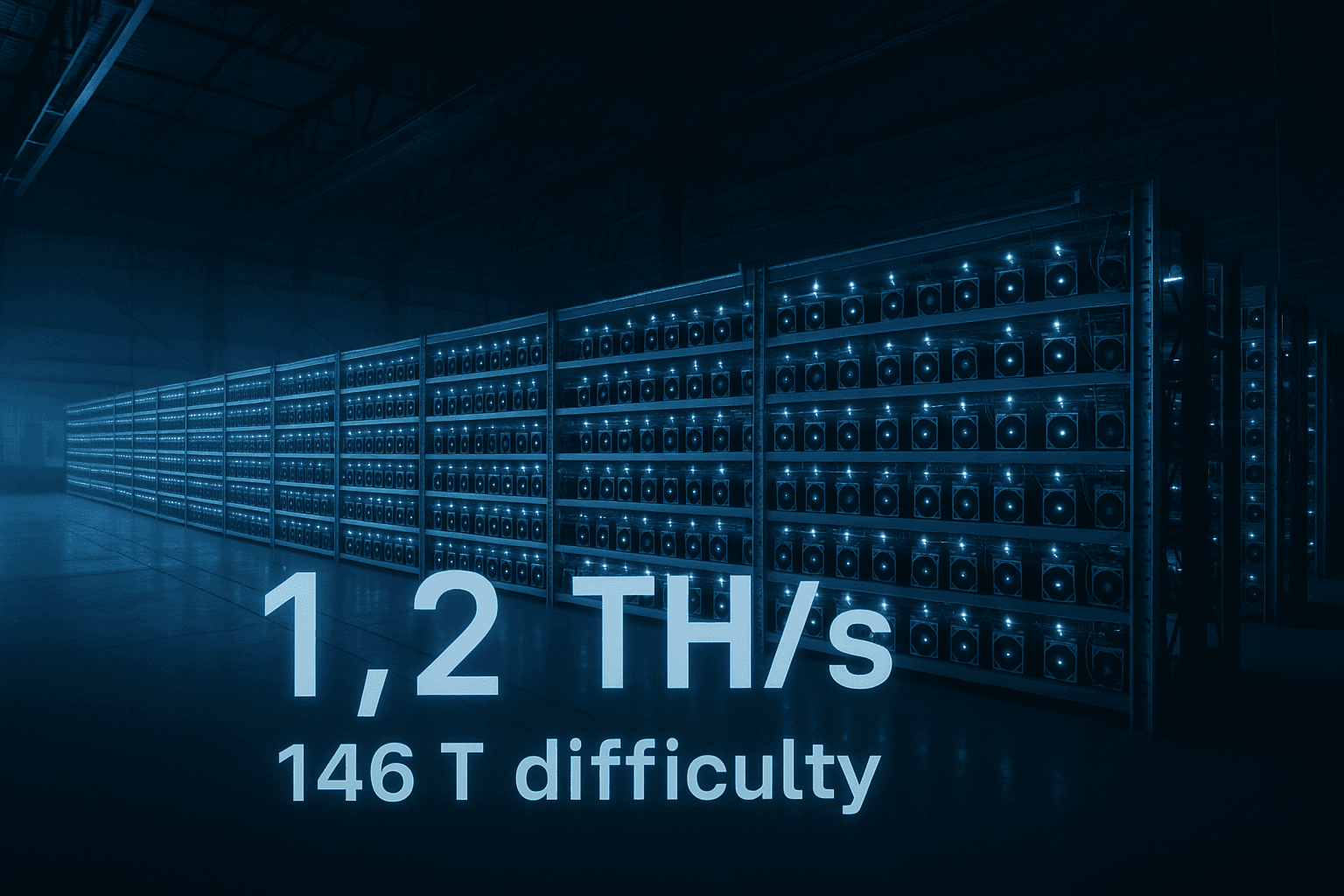
The network’s hashrate, the total computational power securing the blockchain, recently surged to a record 1.2 trillion hashes per second. In contrast, mining difficulty has eased slightly to around 146.7 trillion, down approximately 2.7 % from its prior high.
Mining difficulty adjusts roughly every two weeks to maintain a consistent block interval of 10 minutes. When hashrate rises, the network increases difficulty to offset faster block discovery. The recent dip suggests blocks were being mined slower than expected, prompting the network to temporarily reduce the threshold.
However, this reprieve may be short‑lived. The next adjustment, scheduled for 29 October, is projected to increase difficulty by more than 5 %, pushing it to between 154.98 and 156.92 trillion. This reflects the ongoing trend of more miners or more efficient hardware joining the network.
For miners, this tightening environment follows April’s halving event, which cut block rewards and squeezed profit margins. Many operators are now expanding into AI data centres and high‑performance computing to remain viable. While a higher hashrate strengthens Bitcoin’s security, it also raises questions about centralisation as industrial-scale miners dominate.
Efficiency, access to low-cost energy, and operational agility are becoming critical for long-term survival. In short, difficulty may have dipped, but the direction of travel remains upward, and the mining race is only getting tougher.