
Insights
Feb 22, 2026
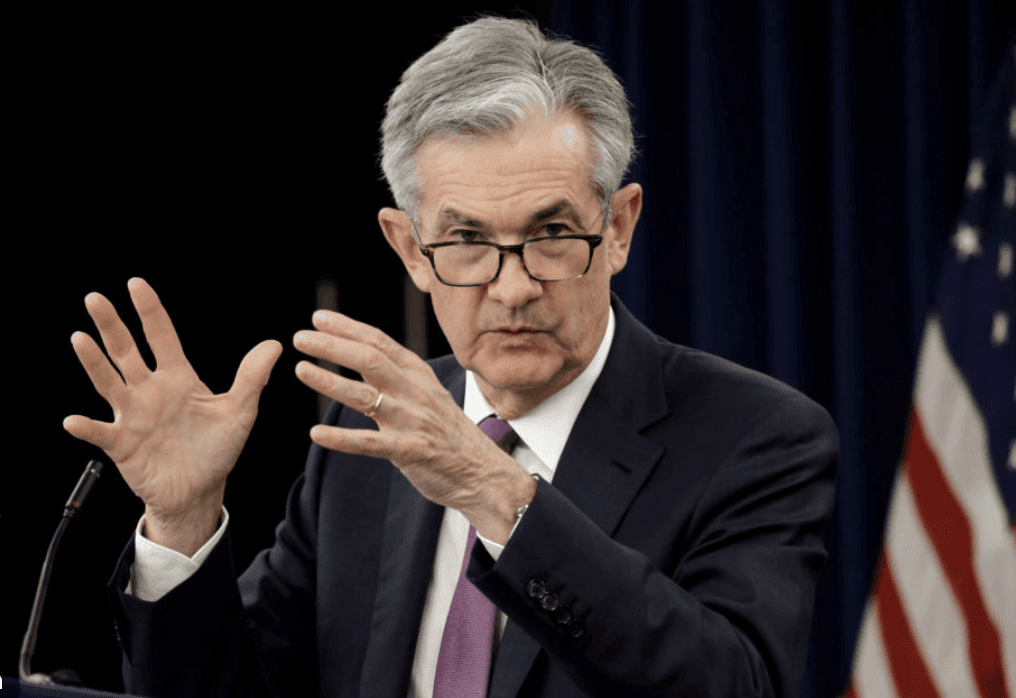
Jerome Powell Photo by: PBS
On January 6, 2026, the Bitcoin Policy Institute published a commentary suggesting that bitcoin could function as a hedge against a potential erosion of the Federal Reserve’s independence, a cornerstone of modern monetary systems. The analysis, authored by Matthew Ferranti, argues that intensifying political pressures on the Federal Reserve may weaken confidence in its autonomous decision-making and that bitcoin’s unique monetary properties could offer investors a way to manage the risks associated with such a shift.
At the heart of the piece is an empirical inquiry into how bitcoin’s market price responds to changes in perceived political interference with the Federal Reserve’s leadership. The author uses prediction market data related to the probability that Federal Reserve Chair Jerome Powell would be removed to proxy for political pressures on the institution. The results of this analysis suggest that increases in the probability of such an event are followed by statistically significant increases in bitcoin’s price, while decreases in that probability have little or no downward effect. This asymmetric response implies that confidence in the Fed’s independence may erode more rapidly than it recovers, and that bitcoin prices could act as a barometer of investor sentiment around central bank autonomy.
Historical Context of Federal Reserve Independence
To appreciate the significance of this analysis, it is necessary to understand the longstanding principle of central bank independence. When Congress created the Federal Reserve System in 1913, it deliberately structured the institution to shield monetary policy decisions from short-term political pressures. Board Governors serve 14-year staggered terms, and the Chair is confirmed by the Senate for a four-year term; Governors can only be removed “for cause.” These features are designed to let the Fed focus on long-term objectives, such as price stability and full employment, without undue influence from political cycles or fiscal considerations.
Throughout the 20th century, the Fed’s independence was affirmed in practice and in principle. A defining moment came after World War II, when the Treasury-Fed Accord of 1951 cemented the central bank’s autonomy from direct fiscal demands. This legacy has underpinned modern monetary policy frameworks, helping central banks anchor inflation expectations and support economic stability. Independent central banks, including the Fed, are credited with enabling credible monetary policy, which reduces inflation risk premia and fosters stable financial conditions.
However, in recent years, the concept of central bank independence has come under pressure. High levels of federal debt, driven by fiscal deficits and entitlements, have increased political scrutiny over monetary policy. Some lawmakers have proposed changes that could indirectly undermine Fed autonomy, such as altering tools for implementing policy or limiting compensation mechanisms for Fed staff. At the same time, political leaders have publicly criticised the Federal Reserve’s decisions on interest rates and, in some cases, openly discussed replacing key officials, moves that investors view as threats to the institution’s insulation from politics.
The macroeconomic backdrop amplifies these tensions. Federal debt held by the public has reached levels last seen during World War II, raising concerns about fiscal dominance — a situation in which monetary policy must acquiesce to financing government obligations rather than prioritising price stability. Historical examples show that when central banks bend to political pressures, inflationary outcomes and economic instability can follow. Major financial institutions have warned that any weakening of the Fed’s independence could disrupt markets, raise borrowing costs, and erode confidence in the U.S. dollar’s role as the global reserve currency.
Bitcoin as a Hedge: What the Data Suggests
Ferranti’s commentary extends this macroeconomic discussion by analysing how bitcoin prices react to shifts in the political risk environment surrounding Federal Reserve independence. Prediction markets, which aggregate trader expectations about future events, provide a real-time gauge of perceived political risks. Ferranti finds that when the probability of the Fed Chair’s removal rises sharply, bitcoin’s price tends to climb in the hours that follow. This pattern could reveal growing investor demand for alternative monetary assets when confidence in traditional monetary policy institutions weakens.
Importantly, the observed price response is asymmetric: bitcoin tends to rise when perceived political pressure increases, but it doesn’t show a corresponding decline when such pressure subsides. This could suggest that confidence in central bank independence is fragile and slow to rebuild once shaken. In contrast, bitcoin’s fixed supply and algorithmic monetary policy — unlike the discretionary policy of the Fed — may make it attractive to investors seeking assets not subject to political interference.
The author also compares bitcoin’s reaction to changes in the U.S. dollar index. While the dollar does appear to depreciate modestly following increases in political risk, the magnitude of the depreciation is smaller than bitcoin’s price increase. This implies that investors might be viewing bitcoin not merely as a speculative instrument but as a potential hedge against loss of confidence in fiat currency systems, particularly during episodes of heightened political uncertainty.
Broader Implications for Bitcoin and Monetary Policy
If bitcoin indeed functions as a hedge against threats to central bank independence, the implications are significant for both monetary policy and asset allocation. For policymakers, this analysis underscores how political discourse and actions aimed at central banks can have ripple effects across global financial markets, extending even into digital asset ecosystems. It also highlights the broader debate over the future role of monetary institutions and the interplay between fiscal and monetary authorities in times of fiscal stress.
For investors, the idea that bitcoin might serve as a hedge against political risk in monetary policy could influence portfolio strategies, especially for those concerned about long-term inflationary pressures and institutional integrity. Traditional hedges, such as gold, have long been viewed as stores of value during periods of monetary turmoil. Bitcoin’s proponents argue that its scarcity, decentralisation, and ease of transfer give it advantages over physical commodities, particularly in an increasingly digital global economy.
Critics, however, remain sceptical. Some economic commentators argue that bitcoin’s volatility and lack of intrinsic yield make it a problematic hedge for traditional financial risks. Others caution that official adoption or accumulation of bitcoin by governments could introduce new forms of market distortion or regulatory challenges. Nonetheless, the discussion around bitcoin and central bank independence reflects broader shifts in how monetary systems are being reimagined in the digital age.
Conclusion
The Bitcoin Policy Institute’s commentary on bitcoin as a potential hedge against threats to Federal Reserve independence contributes to an evolving discourse at the intersection of digital assets and macroeconomic policy. By analysing market reactions to perceived political pressures on the Federal Reserve, the piece suggests that bitcoin’s price dynamics may reflect investor concerns about the erosion of central bank autonomy. Whether bitcoin ultimately fulfils this role consistently remains an open question, dependent on both political developments and broader market adoption. Nonetheless, the analysis highlights the growing relevance of digital assets in conversations that have traditionally centred on fiat currencies and institutional frameworks.