

Why Politics Won’t Fix Money
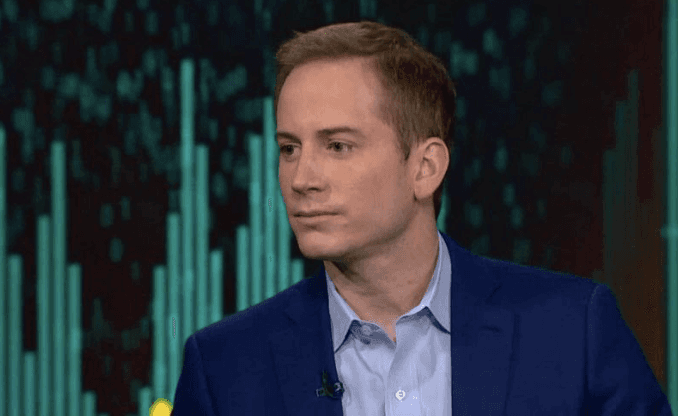
Simon & Danny Photo by: WBD
A recent episode of What Bitcoin Did (989) featuring Simon Dixon challenges a belief many people still hold: that monetary problems are political problems and therefore fixable through elections.
Dixon’s argument is simpler and more unsettling. Politics does not sit at the top of the system. Money does.
Money comes first, politics adapts
In modern economies:
Most money is created through bank lending, not taxation.
Governments finance themselves through debt markets.
That debt must be continually rolled over and serviced.
This structure places hard limits on what elected officials can do. Regardless of ideology, governments must keep markets functioning, credit flowing, and asset prices stable. Leaders change; the monetary constraints do not.
This helps explain why dramatic political shifts so often lead to familiar outcomes.
Why elections rarely change monetary reality
The pattern is consistent:
A reform-minded government is elected.
Central bank policy remains largely intact.
Debt continues to grow.
Asset markets remain protected.
Dixon frames this not as individual corruption, but as structural dependence. Any government that seriously threatens debt markets risks currency instability and capital flight. As a result, politics focuses on secondary issues—spending priorities, regulation, culture—while money creation itself remains untouched.
Left and right, same foundation
The podcast also cuts across the usual ideological divide:
Progressive governments expand social programs via debt.
Conservative governments protect markets via debt.
Both operate within the same credit-based system.
The differences matter politically, but they do not change who benefits most from monetary expansion: those closest to assets and capital markets.
Bitcoin as an exit, not a reform plan
Crucially, Dixon does not frame Bitcoin as a political solution.
Bitcoin does not require:
Winning elections
Passing legislation
Reforming institutions
It works by allowing individuals to store value outside the debt-based system, regardless of who is in power.
In that sense, Bitcoin is not a movement or a protest. It is an exit—one that functions even if politics never changes.
What this reframes for Bitcoiners
If money constrains politics, then political alignment matters less than technical and legal reality. The real questions are not about elections, but about:
Custody versus self-custody
Leverage and rehypothecation
Surveillance and financial integration
Bitcoin’s long-term relevance depends on whether it remains usable as an opt-out—not on whether it is embraced by governments.
The takeaway
You do not need to accept every claim made in the podcast to engage with its central insight:
If money is upstream of politics, then politics cannot fix money.
Bitcoin’s significance, in this framing, is not that it will be adopted by the system—but that it still works without the system’s permission.
Check out the full episode here: