Learn
Jan 9, 2026
The Internet of Money Photo by: Logo Gen (AI)
In the early days of the web, it was hard to imagine just how deeply it would change the world. We went from static pages to streaming video, from dial-up forums to global conversations in real time. The internet reshaped how we communicate, learn, and share ideas. But one piece remained stubbornly out of reach: money.
You could send a message around the world in seconds — but sending $5? That still meant banks, fees, delays, and permissions. The digital revolution had connected our voices, but not our value.
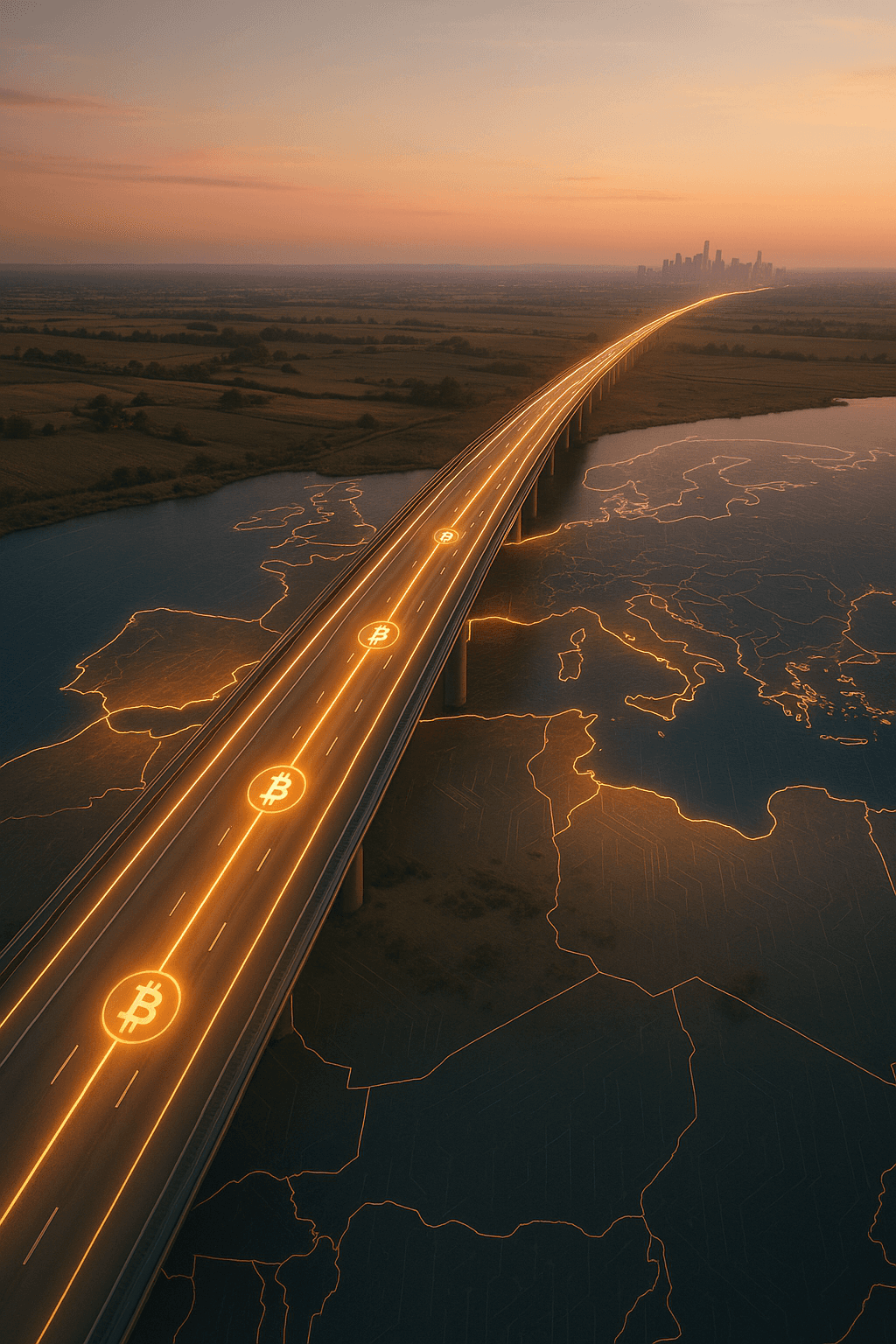
Bitcoin changes that. And in doing so, it gives rise to what some call the Internet of Money — not just a currency, but a protocol for sending and receiving value with the same openness and speed as email or websites. It’s a global financial rail, accessible to anyone with a smartphone and an internet connection. No bank required.
This isn’t about speculation or headlines. It’s about infrastructure. Bitcoin allows people to transact peer-to-peer, across borders, without asking permission. The rules are enforced by code, not by institutions.
In wealthier economies, Bitcoin may serve as a quiet alternative — a new form of savings immune to inflation or political whims. But in places where currencies are collapsing and trust in institutions is broken, it becomes something far more essential: a tool for survival.
Just as the internet made publishing and broadcasting accessible to all, the Internet of Money makes finance something you can opt into, not something you’re granted access to.
Of course, this new system is still young. It's not always user-friendly. It can feel unfamiliar. But that’s how all revolutions begin — messy, uneven, and full of possibility. Like the early internet, it’s being shaped not by governments or corporations, but by communities, coders, and curious minds.
Bitcoin is not the end of money. It’s the beginning of a new chapter — one where financial freedom is no longer a privilege, but a protocol. One where anyone, anywhere, can connect, transact, and build — not just with information, but with real economic power.