
Markets
Feb 22, 2026
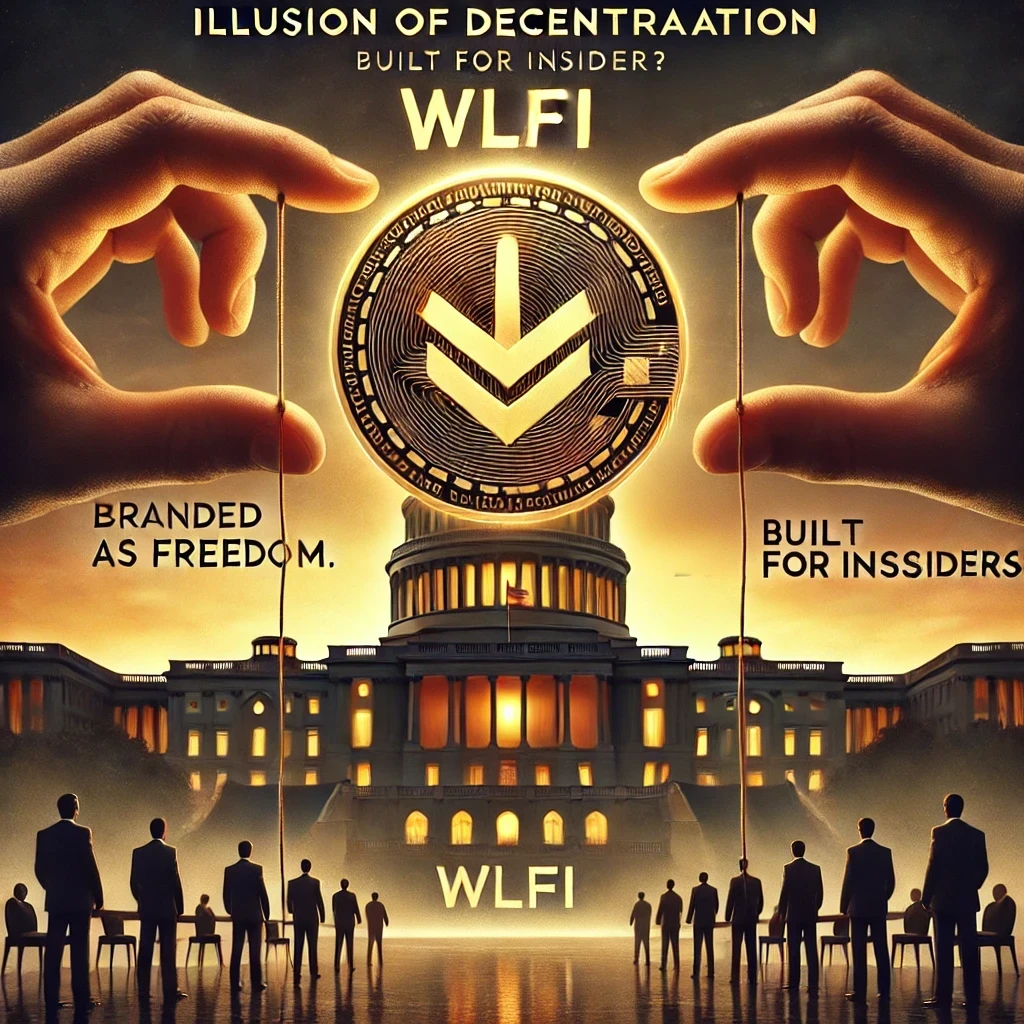
WLFI: Hype, Power, and the Illusion of Decentralization Photo by: Chat GPT
WLFI launched with fanfare, branding itself as the governance token of World Liberty Financial (WLF), a new DeFi platform aiming to merge traditional finance with the decentralized world. At the center of the project is the Trump family, with Donald Trump serving as Chief Crypto Advocate and his sons acting as Web3 Ambassadors.
The project touts big goals — bridging TradFi and DeFi, issuing a dollar-backed stablecoin (USD1), and giving users governance power through the WLFI token. But beneath the surface, what emerges is less a decentralized protocol and more a politically-branded venture capital engine, with serious questions about centralization, valuation, and integrity.
WLFI Supply: 100 billion tokens total
Trump Family Allocation: 22.5 billion tokens (22.5%)
Trump Family Revenue Share: 75% of net revenue from WLFI sales
Circulating Supply at Launch: ~27 billion tokens
Initial Price: $0.40 (briefly), dropping to ~$0.21
Initial Fully Diluted Valuation (FDV): $34–$43 billion
Current Circulating Market Cap (at ~$0.21): ~$5.7 billion
USD1 Stablecoin Market Cap: $2.2 billion
Exchanges Listed On: Binance, Bitget, HTX, OKX, Coinbase
Despite its claims of decentralization, control remains tightly concentrated. The governance structure caps individual wallet voting at 5%, but this does little to prevent coordinated influence from insiders — especially given that nearly half the token supply is allocated to the founding team, strategic partners, and associated entities.
What’s more, WLFI’s valuation appears largely detached from utility. At the time of writing, there are no live borrowing or lending features. The WLFI token grants governance rights, but these are limited in scope and largely ceremonial. The actual usage of WLFI — beyond speculation — remains minimal.
Centralization of Power: A small group of politically connected individuals and entities holds the majority of tokens and revenue rights.
Limited Utility: WLFI currently does not support staking, lending, or yield-generation. Most platform features are still “coming soon.”
Speculative Valuation: The $34B FDV at launch was driven more by political branding and exchange listings than by functional demand.
Security Vulnerabilities: Users reported token theft and Ethereum-based exploits shortly after public trading began — a red flag for any DeFi platform.
Ethical and Political Conflicts: Trump’s involvement raises significant concerns about influence, regulation, and fair access — especially given the family’s direct financial benefit and recent history with similarly structured ventures.
In many ways, WLFI follows a pattern that’s becoming all too familiar in the broader crypto space: a high-profile launch, a celebrity figurehead, early insider enrichment, and a public offering framed as a populist opportunity. It borrows the language of decentralization, but the structure is corporate, hierarchical, and profit-driven at its core.
Compare that to Bitcoin — launched with no pre-mine, no insider allocation, no marketing team, and no figurehead. Bitcoin requires no trust in any person or institution. It doesn’t promise quick riches. Instead, it offers something quieter and more resilient: a rules-based monetary system, open to anyone, controlled by no one.
WLFI may generate headlines, and for some early investors, it may generate returns. But it does not represent the spirit or principles of decentralized finance. If anything, it’s a reflection of what Bitcoin set out to escape: insider-dominated systems dressed in populist clothing.
In the end, it’s not just about whether WLFI succeeds or fails. It’s about what kind of financial world we’re building — one where power is distributed, or one where it’s simply reshuffled and sold back to us under a new name.