
Fiat World
Feb 22, 2026
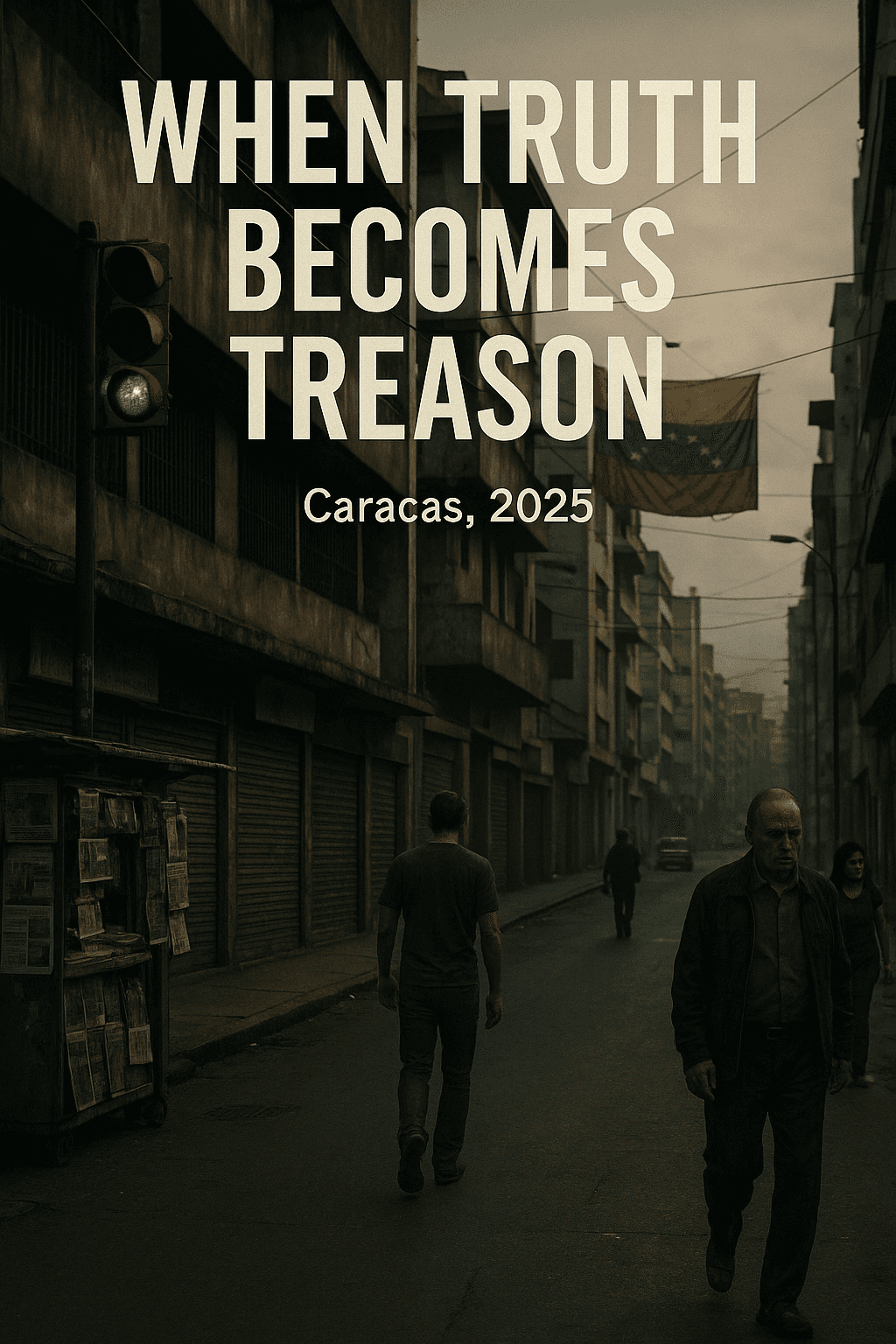
Venezuela's War on Data: When Truth Becomes Treason Photo by: Sora - AI
In a quiet Caracas office just months ago, a team of economists carefully tracked the numbers most Venezuelans could already feel in their bones — prices soaring, wages shrinking, the currency slipping faster by the day. They published inflation rates, exchange values, and forecasts that painted a stark picture of economic collapse. Then, the arrests began.
Over the past two months, at least two dozen economists, analysts, and data publishers have been detained by Nicolás Maduro’s government, accused not of theft or corruption, but of something far more subversive in a crumbling state: describing reality. Independent figures, like the Venezuelan Finance Observatory (OVF), reported inflation hitting 229% in May 2025 — numbers that contradicted official narratives. Within weeks, OVF analysts were jailed, its website taken offline, and its social media accounts silenced. Venezuela's central bank, long reluctant to release inconvenient data, stopped publishing inflation figures altogether. What’s unfolding isn’t just a political crackdown — it’s a campaign to suppress measurement itself, to eliminate the possibility of shared truth in a system defined by economic decay.
This effort is not new, but it is intensifying. Bloomberg reported that at least eight independent economists and consultants were detained in June alone, including a former finance minister. The Financial Times noted dozens more arrested in parallel crackdowns on black-market currency activity. Human rights groups and civil society organizations see a deliberate attempt to crush any voice exposing what state propaganda cannot spin: a broken economy, where the bolívar loses three-quarters of its value every six months and inflation quietly erodes what’s left of people’s savings.
The government’s strategy is painfully clear: if it can’t stop the inflation, it can try to stop people from talking about it. But detaining economists doesn’t slow price hikes. It only obscures them, leaving citizens disoriented and vulnerable. By criminalizing transparency, the state ensures fewer tools for people to adapt or prepare. It transforms a crisis into chaos.
There are echoes of this playbook elsewhere — Turkey under Erdoğan, where statisticians were sacked for publishing “inconvenient” inflation numbers; Argentina during its data manipulation years. But Venezuela’s case is especially severe. The OVF, once a vital alternative to the censored central bank, has gone silent. The last official inflation figure was published nearly a year ago. In the absence of credible data, rumors fill the vacuum. Prices are whispered in group chats. Black-market exchange rates become gospel. And trust — in money, in institutions, in each other — collapses further.
Across social media, citizens and exiled economists are sounding the alarm. “Telling the truth puts a noose around your neck,” one journalist wrote, “but lies put one around the whole country.” A Mexican outlet likened Maduro’s campaign to a war on reality itself. Others in Brazil and Argentina drew parallels to their own histories of monetary failure — all of them recognizing the same pattern: when fiat money fails, governments often go after the messengers before admitting the message.
The human cost is not just political — it’s deeply personal. Hyperinflation isn't just an abstract number. It means pensioners can’t afford medicine. It means salaries lose value before they’re even spent. It means families choosing between food and transit, light and shelter. And when a government silences those trying to name the problem, it leaves its people stumbling through the dark, unable to plan or hope.
The tragedy in Venezuela is not just economic mismanagement — it’s the deliberate abandonment of truth as a public good. In doing so, the state has not merely broken its currency, but fractured the fragile social contract that once held its people together.
The decline of a currency rarely begins with inflation alone. It often starts with silence — when truth becomes too dangerous to speak. No system can survive without trust, and trust can’t survive without honesty.
Suppressing data won’t stop the unraveling. It only hides the warning signs — until it’s too late.