

Fiat World
Feb 22, 2026
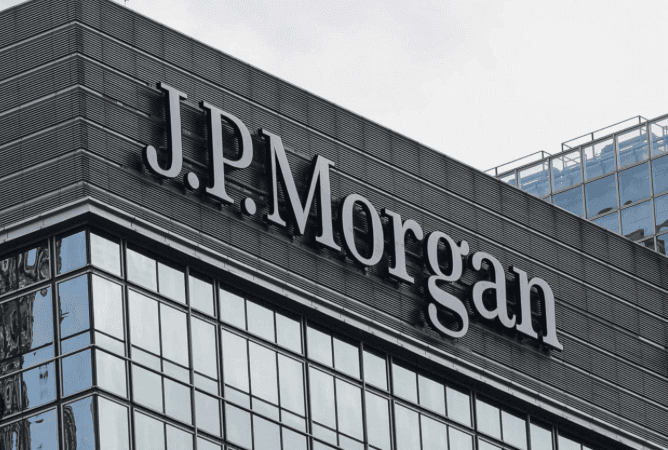
JP Morgan Chase Photo by: Google
JPMorgan Chase has taken a notable step into the institutional Bitcoin space, filing with the U.S. Securities and Exchange Commission to issue structured notes tied to BlackRock’s iShares Bitcoin Trust (IBIT). These notes are designed to mirror Bitcoin’s four‑year “halving” cycle and offer investors a blend of potential returns and partial downside protection.
Under the terms of the offering, if IBIT rises above a predetermined threshold by an observation date in late 2026, the note will be automatically called, returning principal plus a guaranteed 16 % profit.
If IBIT fails to hit that target, the note remains in force until maturity in 2028. In that scenario investors stand to gain 1.5 times any appreciation of IBIT, subject to a cap.
On the downside, the notes offer limited principal protection only up to a 30 % decline in IBIT’s price. Should the ETF fall more than that, investors may suffer proportional losses, potentially losing a significant portion — or even all — of their principal.
The notes are unsecured obligations of JPMorgan Chase subsidiaries, meaning their value also rests on the bank’s creditworthiness.
The offering reflects growing institutional appetite for Bitcoin exposure via regulated, traditional‑finance instruments rather than direct crypto custody. It aligns with a broader shift in the view of Bitcoin not merely as a speculative asset, but as a macroeconomic or store‑of‑value play. By packaging Bitcoin exposure in a structured note, JPMorgan may be aiming to attract conservative or institutional investors wary of direct crypto ownership.
Yet experts warn the product carries notable risks. The leverage effect could magnify gains — but also losses should IBIT underperform. The cap on upside and the issuer credit risk mean that investors may lose upside compared to owning the ETF directly. Furthermore, limited liquidity and the complex payoff mechanics make the notes a sophisticated instrument more suited to informed investors than retail punters.
In sum, while JPMorgan’s structured notes provide a novel route for Bitcoin exposure via traditional financial markets, investors must weigh the attraction of amplified returns against credit risk, potential losses, and complexity.