
Fiat World
Feb 22, 2026
Guardians of Money Confront the Digital Future Photo by: Wiki
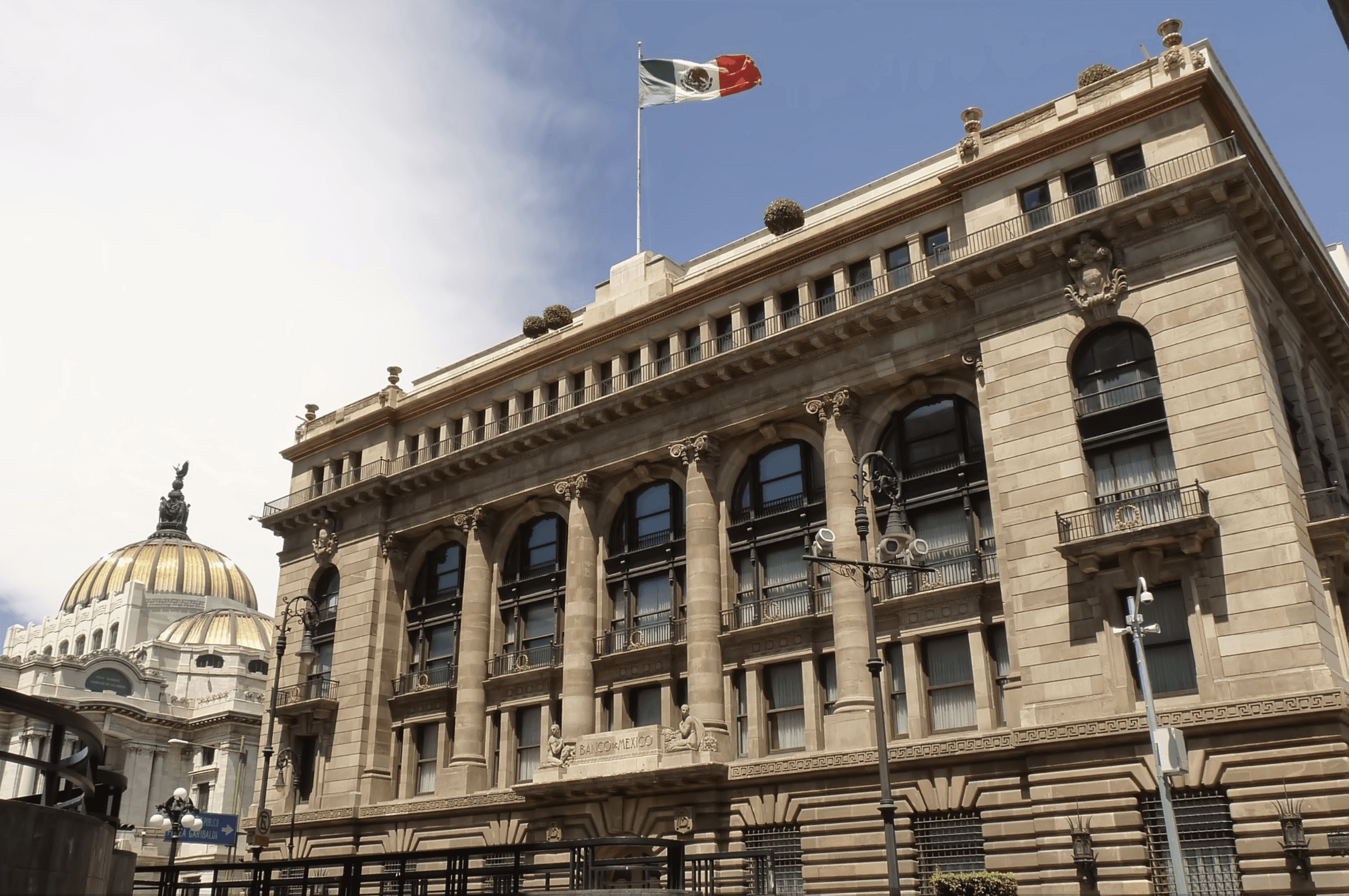
On the evening of September 4, 2025, in the Raúl Baillères Auditorium at ITAM’s Río Hondo campus, three former governors of Mexico’s central bank gathered to mark a milestone: the centenary of the Bank of Mexico. The event, titled “Conmemoración del Centenario del Banco de México: Baluarte de la Institucionalidad (1925–2025)”, was not just a commemoration but also a moment of reflection. Agustín Carstens, Guillermo Ortiz, and Alejandro Díaz de León — each of whom had steered Banxico through turbulent economic periods — sat together to discuss the future of money in an age of rapid technological change.
What unfolded was not a debate about nostalgia for the past, but a candid reckoning with new forms of digital money, from Bitcoin to stablecoins, and the challenge they pose to central banks. Carstens was blunt: privately issued money has historically ended in chaos. Reaching back to the 16th century, he argued that whenever money is created for profit rather than trust, the result is instability — and in Mexico’s case during the Revolution, outright hyperinflation. For him, Bitcoin and its peers are not innovations but echoes of failed experiments.
And yet, history offers a more complicated picture of trust. In Broken Money, Lynn Alden recounts how, at the outbreak of World War I, the Bank of England engineered a clever illusion. The government needed vast sums to finance the war, but public appetite for lending was far from certain. So the Bank quietly lent money to itself, disguising the loans as if they came from eager citizens. Newspapers reported that the country was “proudly funding the war,” and ordinary savers, believing they were joining a national movement, poured in their money. The truth — that the early “funding” had been staged — did not come to light until decades later. What looked like public trust was, in fact, a carefully managed deception.
That episode matters here because it reminds us that central banks, too, have at times bent reality to preserve confidence. Trust, once shaken, may hold together for a while, but cracks eventually show. The story from London in 1914 was an early sign that the relationship between people and their money could be shaped as much by illusion as by stability — and once uncovered, it cast a long shadow.
In that light, Carstens’ warnings about private money sound less absolute. If central banks themselves have occasionally resorted to tricks to maintain trust, is it any wonder that alternatives like Bitcoin arose — not as polished currencies today, but as experiments in building trust without institutions?
None of the three governors at ITAM dismissed technology itself. Ortiz highlighted public payment systems like SPEI in Mexico and PIX in Brazil, showing how digital rails can lower costs and expand financial inclusion. Díaz de León drew a careful distinction between volatile cryptocurrencies and so-called stablecoins, which he described as digital “wallets” tied one-to-one with central bank money — but only if tightly regulated.
Beneath their differences, a common thread emerged: the central challenge for central banks is to maintain trust in money, whether physical or digital, while modernizing fast enough to meet public demand. Carstens warned that the financial system is lagging behind what users now expect in terms of digital convenience. Ortiz and Díaz de León saw an opportunity: platforms that reduce cash use, improve oversight, and simplify consumer experiences could strengthen transparency and inclusion.
What was left unsaid but hung in the air was the deeper question: who should define the future of money? Central banks seek to modernize without losing authority, but Bitcoin represents a radically different wager — that people can hold value without permission, without illusion, and without a guardian to trust.
The governors’ skepticism reflects a conviction that money must remain a public good, guarded by institutions. Yet their acknowledgment of technological pressure shows how much the ground has already shifted. From London in 1914 to Mexico in 2025, the story circles back to the same fragile foundation: trust. The debate is no longer only about payment systems; it is about sovereignty itself — whether money’s future will be written by institutions, or by code.