
Nov 20, 2025
Czech Central Bank Launches $1 Million Bitcoin Test Portfolio
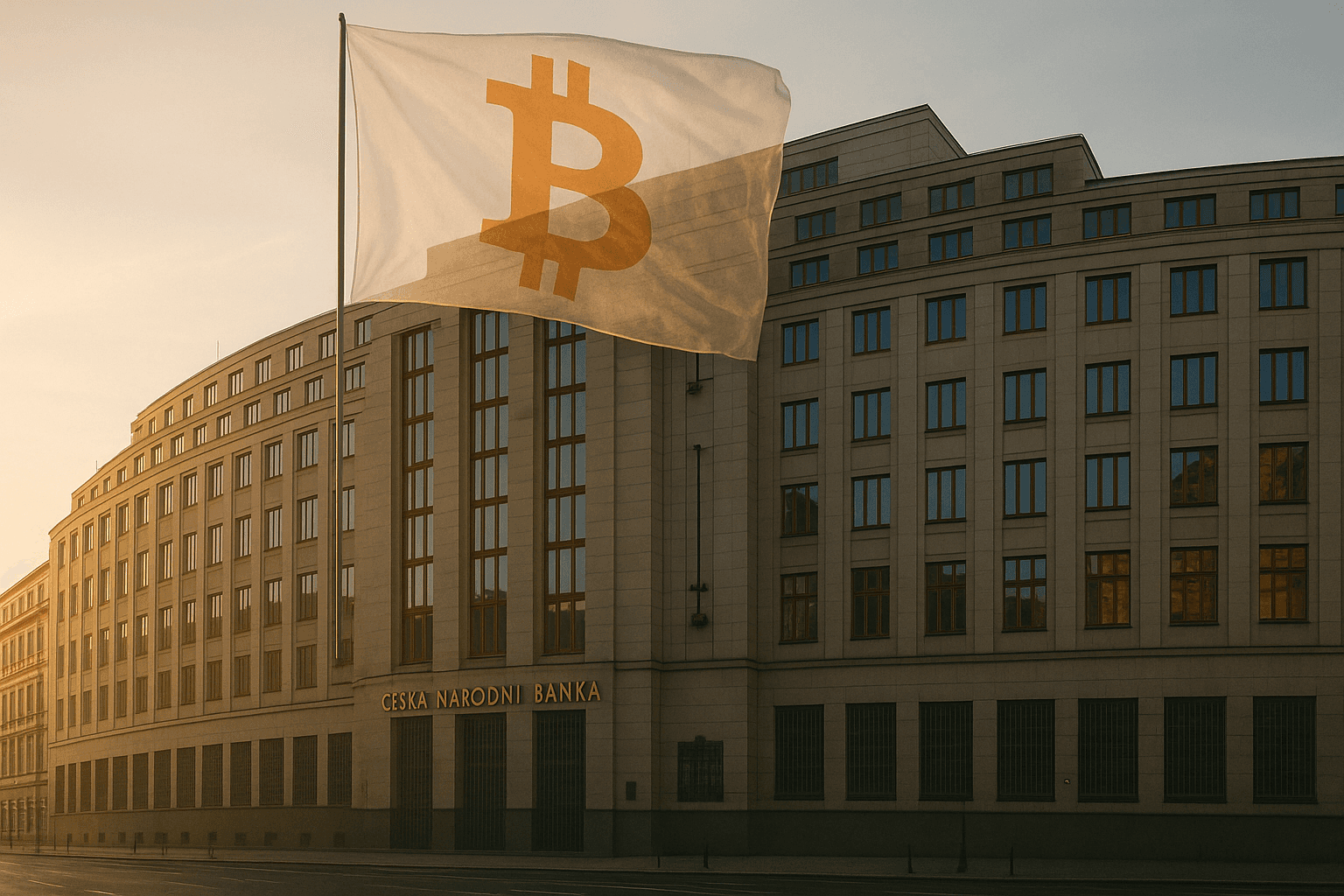
Czech Central Bank Photo by: Midjourney
The Czech National Bank (CNB) has announced the creation of a pilot digital‑asset portfolio totalling approximately US$1 million, in which Bitcoin is the principal component, supplemented by US‑dollar pegged stablecoins and a tokenised deposit.
The initiative, approved on 30 October 2025, is being held separately from the bank’s official international reserve assets and will not be actively increased.
Governor Aleš Michl explained the pilot is designed to test the full life‑cycle of digital‑asset management — from key‑administration and multi‑level approvals to crisis‑scenario handling and anti‑money‑laundering compliance.
According to the CNB, the objective is not immediate reserve diversification but building in‑house operational experience with blockchain‑based assets and tokenisation possibilities, including the future potential for the Czech koruna to be used in tokenised financial instruments and bonds.
The timing and geographical context are notable. The Czech Republic, though an EU member, has retained its own currency (the koruna) and central‑bank autonomy, giving the CNB latitude to experiment. Earlier this year, the European Central Bank’s President Christine Lagarde publicly dismissed the idea of Bitcoin as a reserve asset for euro‑area central banks.
By contrast, the CNB’s pilot does not yet aim to classify Bitcoin as a reserve asset; however it does reflect a forward‑looking stance toward digital asset markets.
From a broader perspective, the move may act as a signal to markets that central‑bank engagement with Bitcoin infrastructure is advancing beyond theoretical research and into real operational testing. While the size of the portfolio is small relative to central‑bank balance sheets, the fact it is being publicly disclosed is itself meaningful for the Bitcoin ecosystem.
In closing, while the CNB emphasises that this is a learning exercise not a change in policy, the development underscores the growing relevance of Bitcoin in institutional and monetary‑policy circles.